Club Officers and Meetings
Club officer roles and weekly meeting habits explained for students with elections, agendas, service hours, fundraising basics and faculty adviser support.
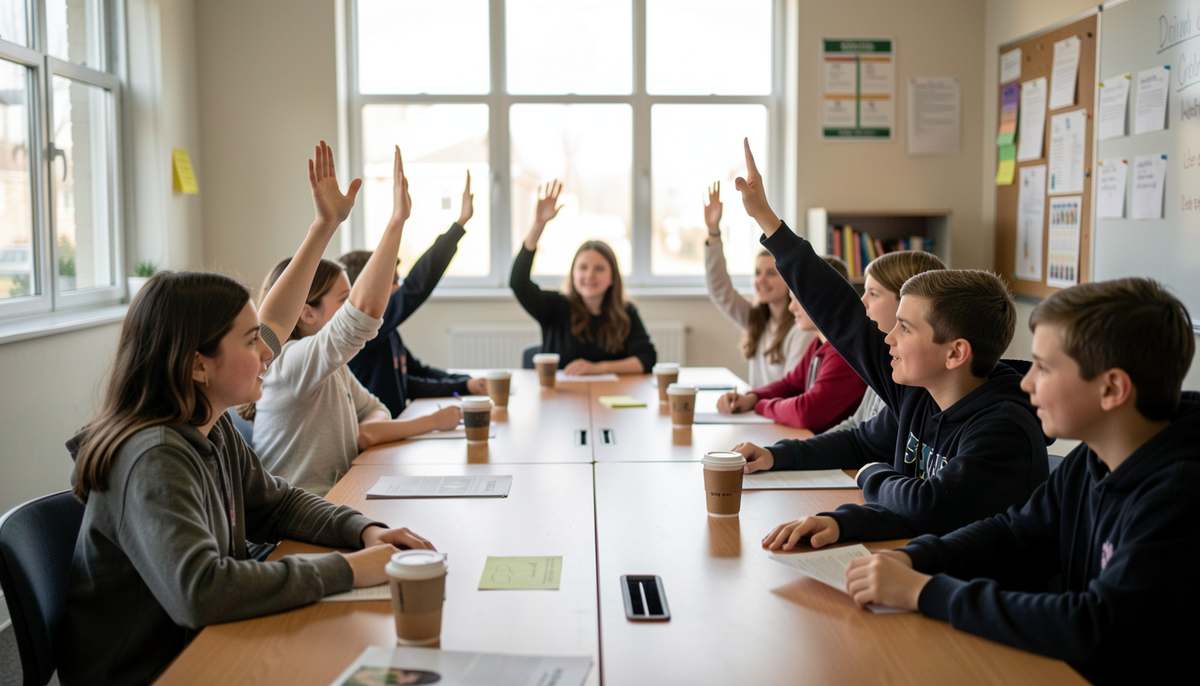
Your club can borrow the shape of a large science fair to give each officer a clear job, and the page does not publish officer duties, agendas, or service-hour rules for school clubs. You will see how a president, a vice president, a secretary and a treasurer divide the work around affiliate fairs, categories, awards and fair week events.
What does a club president actually coordinate?
Think of the president as the person who keeps the calendar and the chain of approval in order. In your school that means setting meeting dates, confirming who can enter a Society-affiliated local, regional, state, or national fair, and checking that each project meets official rules and guidelines before it leaves campus. The job is coordination, not science direction, and it shows why one person must hold the full picture.
The international fair gives you a scale to explain that role to parents. Finalists described on the page were selected from 365 affiliate fairs in more than 60 countries, regions, and territories, and each one earned a place by winning at a Society-affiliated fair. Your president can use that example to show why deadlines, forms and category choices have to be settled early in the year.
How does the vice president keep projects moving?
The vice president can act as the backup lead for research progress. That officer checks in with teams between meetings, lines up peer review inside the club and steps in to run a meeting when the president is absent. The limit is clear too, since the vice president does not change a project category or sign off on integrity questions alone.
Use the 22 scientific categories as a practical tool. Your vice president can keep a simple roster of who plans to enter which category, flag overlaps where two teams chose the same question type, and point members toward the definitions and details of the competition categories. A searchable database of abstracts from 2014 to 2026 helps members read past examples without copying them.
Why does the secretary own the paper trail?
The secretary holds the written record so nothing depends on memory. That means dated minutes, a list of decisions, a file of abstracts and a copy of project guidelines for each team. When a family asks what was approved and when, the answer sits in one folder.
Agendas stay short when they follow the same pattern each time. Your secretary can circulate three items before the meeting, record attendance and votes during the meeting, and send a brief note after with tasks and due dates. Answers to questions for students, parents and teachers, as posted for the international fair, show the same habit of keeping guidance in writing.
What does the treasurer track when awards exceed 7 million dollars?
The treasurer tracks income and expenses, even when the club handles small sums. Dues, printing, boards, travel to an affiliate fair, and fees for display supplies go on one sheet, with receipts attached. The rule behind the job is simple, since shared money needs a shared record.
The international fair helps families understand why costs and prizes stay separate. Finalists compete for over 7 million dollars in awards, prizes, and scholarships, and more than 45 professional organizations give out Special Awards at the event. Your treasurer does not promise funds or predict winnings, but can show families the fair week in Phoenix and explain that club spending covers learning and entry, not a share of those awards.
How do you build an agenda that fits a fair week?
A school agenda works best when it mirrors real fair events in small form. Start the fall with question choice and category checks, move to methods and safety review in winter, then hold a mock judging round in spring before any affiliate fair. Each meeting can end with one task per team and one date.
Fair week itself ran from May 9 to May 15, when more than 1,700 young scientists, engineers, entrepreneurs and inventors gathered at the Phoenix Convention Center for events, contact with peers and STEM leaders. Your club can copy that rhythm with an opening night, a judging day and an awards review, plus time to watch the Opening Ceremony together and discuss what judges noticed.
Where do service hours come from without guessing?
Service hours should come from named tasks with a start time, an end time, and an adult who confirms attendance. In a science club that often means setup for a school fair, mentoring middle school students, running a STEM activity table, and cleaning up after display night. Hours without a sign-in sheet create disputes, so the sheet is the rule.
Education Outreach Day offers a model you can describe to members. It brings local middle and high school students to the fair to meet finalists, take part in STEM activities, and create their own scientific questions. A separate college and career fair lets colleges, universities, and other organizations meet students and describe what their institutions offer, and your members can staff similar tables at school level for verified hours. For ideas on sequencing work across months, see the question to display timeline.
How do you close the year and keep records straight?
Closing the year means filing what the next officers will need. Keep the final roster, the minutes, the project titles by category, copies of press releases or program books when your teams receive them, and notes on what to change. Mention the limits of each role so the next team does not inherit confusion about who approves spending or who signs forms.
Keep judges, volunteers, and guests in the same file. The page invites volunteers and interpreters for the Phoenix event in May 2026, seeks Grand Award judges for 2027, offers media registration for applicants with valid media credentials, and describes sponsorship by corporations, foundations, organizations, and individuals. Your club can list its own helpers the same way and link that list to time costs and roles in academic clubs. Ask each outgoing officer to hand over one folder and walk the incoming officer through it before summer.
Society for Science runs the Regeneron International Science and Engineering Fair. The page lists the 2026 gathering in Phoenix, the path through affiliated fairs, 22 categories, Grand Awards and Special Awards, the Virtual Fair, outreach and college events, and judging and volunteer information. It also points to rules, project guidelines, abstracts from 2014 to 2026, and a three-part series on the National Geographic channel and on Disney Plus and Hulu.