School Choir From Audition to Concert
School choir auditions, voice parts and concert seasons explained for parents, with rehearsal schedules, uniforms, travel expectations and growth markers.
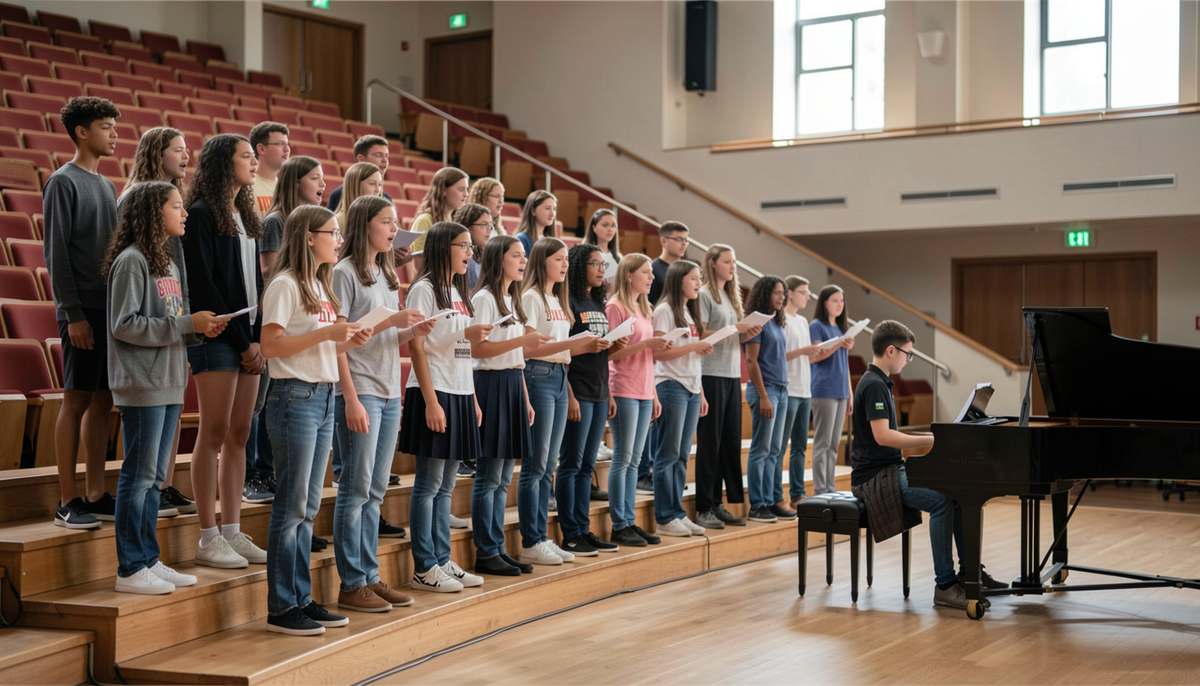
High school choir moves through auditions, voice parts and three performance cycles, and the national picture helps you place your school year in context. The NFHS describes itself as the national leader and advocate for high school sports and activities in the U.S., with a goal that all students have the opportunity to Play, Perform and Compete Together.
What does a high school choir audition ask you to do?
You walk in and a director listens to how you sing alone and with others, checking range, tone and how you follow a part. Many schools use a short song or vocal exercise so the director can hear where your voice sits naturally and how you hold a melody. You may sing back a pattern, hold your line while another line moves, and talk briefly about past singing and availability for rehearsals. The NFHS page does not publish audition scales or part assignments. Your director decides placement based on balance across the group and on what the chosen music needs, which is why the same student can sing one part in one piece and support another part in the next one.
Where do soprano, alto, tenor and bass fit?
Think of the choir as layers from higher to lower voices that fit together like sections in a band. Soprano often carries the melody up high, clear and easy for an audience to follow. Alto sits just below, adding warmth and filling the middle so the melody does not sound thin. Tenor brings a lighter lower sound that bridges the middle and lower voices, often moving with energy inside the harmony. Bass grounds the whole sound from below, giving pulse and depth to each chord. You learn your line by listening across the room as much as by singing your own notes, because blend matters more than volume. Directors shift singers between inner lines to keep tone even and to help you grow across the year.
How does the fall cycle set the year?
Fall is when the group learns to breathe together and listen as one ensemble. You meet new voices, learn rehearsal habits and start reading the opening set of pieces that teach balance and timing. The wider high school context is large: the NFHS page shows 12,415,684 participants, 19,952 schools and 51 associations under one NFHS. Those figures sit beside the headline that Girls Flag Football, Girls Wrestling Lead to Record Sports Participation. For choir families, the point is simple: activities share seasons, gyms and calendars, so fall rehearsals compete with other tryouts and school events for time and rooms. You can map homework, work shifts and family travel around a few evening calls before the opening school performance.
What changes when winter concerts arrive?
Winter brings shorter days and the concerts many families remember well. You rehearse with more focus on entrances, cutoffs and dynamics because the room is quieter and every line shows. Layered clothing, colds and holiday travel test attendance, so directors plan seating and backup coverage early. Many parents check dates through the choir concert season calendar to plan travel and study time around rehearsals and dress calls. To place choir inside the wider activity system, you can read the national leader for activities and see how it writes playing rules, conducts research, offers guidance, provides education and celebrates successes across sports and activities. That frame explains why schools protect rehearsal time once winter programs go to print.
Why does spring feel different for singers?
Spring feels looser and more confident because the group knows one another's sound. You often revisit hard passages with better breath control and cleaner tuning, and newer singers who were quiet in fall start to lead entrances. Programs may mix contest pieces, pops selections and farewell songs for graduating seniors without losing the core tone built since fall. The same season brings national growth elsewhere: led by Girls Flag Football and Girls Wrestling, high school sports participation has increased for a fifth consecutive year. That trend matters for singers too, because budgets, buses and evening slots are shared across departments. You can listen for balance in spring recordings and notice how inner voices carry more weight than before.
Who supports choir beyond the school walls?
Behind your school stands a structure that links state associations and activity programs. The NFHS lists membership for Coaches, Officials, Music Directors and Adjudicators and Speech, Debate and Theatre, which shows that choir sits beside sports and other activities under the same roof. The NFHS Coaches Association offers exclusive online services, including access to rules and case information, representation on national rules committees and NFHS standing committees, as well as eligibility for various State, Sectional, and National Awards. For choir families, the takeaway is practical: directors and adjudicators have a place to compare practices, clarify expectations and keep judging consistent from one event to the next. You benefit when feedback uses the same language from school to school.
How can you follow a season without missing steps?
Start with the calendar on your fridge and work backward from concert weeks. Ask your director how voice checks work, where your current range fits among soprano, alto, tenor and bass, and what practice helps most between rehearsals. Compare choir demands with other activities through the marching and concert band costs guide so you see how time and travel overlap in fall and winter. The NFHS Parent Survey indicates overwhelming support for education-based athletics and activities, and the Participation Survey indicates continued importance of education-based sports and activities. That backing helps explain why schools keep evening rehearsals even when gyms are crowded. Write down a short list of questions for your director this week and bring them to the next rehearsal or parent meeting.